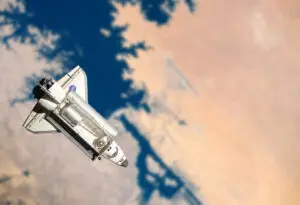

If you have ever watched a rocket climb off the pad and thought, “I want to build that,” you already share something with every aerospace engineer who came before you. Figuring out how to become an aerospace engineer can feel overwhelming when you are staring at degree requirements, math courses, and a job market full of impressive resumes. The good news is that the path is clearer than it looks. This guide walks you through exactly what the role involves, the education and skills you need, how to gain real experience, and the steps that turn a space-obsessed student or career-changer into a working aerospace engineer.
What Does an Aerospace Engineer Actually Do?
Aerospace engineers design, develop, and test the machines that fly, from commercial aircraft and helicopters to satellites, launch vehicles, and deep-space probes. The field splits broadly into two camps: aeronautical engineering, which focuses on craft that operate inside Earth’s atmosphere, and astronautical engineering, which deals with spacecraft and systems that work beyond it. Day to day, you might run simulations of how air flows over a wing, model the heat a capsule experiences during reentry, analyze structural loads, or troubleshoot why a propulsion component is underperforming. It is a career built on curiosity, careful problem-solving, and a willingness to keep testing until something works.
How to Become an Aerospace Engineer: The Education Path
The most direct answer to how to become an aerospace engineer is to earn a bachelor’s degree in aerospace engineering or a closely related field such as mechanical engineering. According to the U.S. Bureau of Labor Statistics, a bachelor’s degree is the standard entry point into the occupation. Look for programs accredited by ABET, since many employers and licensing boards expect that credential. Over four years you will work through calculus, physics, fluid dynamics, thermodynamics, materials science, propulsion, and control systems. A master’s degree is not required to start, but it can deepen your specialization and is linked to higher salaries and access to senior research, design, and project management roles.
Choosing the Right Degree and Coursework
Not every aspiring engineer has an aerospace program nearby, and that is okay. A mechanical, electrical, or even software engineering degree can lead into the industry, especially as modern spacecraft depend heavily on avionics and code. When you compare programs, look at access to labs, wind tunnels, student rocketry or satellite teams, and faculty doing research you find exciting. Strong math and physics foundations matter more than the exact name on your diploma, so do not panic if your school calls its program “mechanical and aerospace engineering.” What counts is mastering the fundamentals and proving you can apply them.
Skills That Set Aerospace Engineers Apart
Technical knowledge gets you in the door, but specific skills help you stand out. Employers look for fluency in engineering math, comfort with simulation and CAD tools such as MATLAB, ANSYS, SolidWorks, and CATIA, and increasingly, programming ability in Python or C++. Equally important are communication and teamwork, because aerospace projects are enormous collaborations where a single miscommunication can be costly. Building a rock-solid grasp of the fundamentals early pays off, and a classic text like Introduction to Flight by John D. Anderson (#ad): It is widely used in university courses and gives newcomers an accessible introduction to the physics of flight before they hit advanced coursework. You will also live in your calculator during exams and design work, so a capable model such as the TI-Nspire CX II CAS Graphing Calculator (#ad): It handles the symbolic math and graphing that aerospace coursework throws at you and is permitted on many standardized engineering exams.
Internships, Co-ops, and Hands-On Experience
Classroom knowledge alone rarely lands the first job. Internships and co-op positions at companies like NASA, SpaceX, Blue Origin, Boeing, Lockheed Martin, and a growing field of space startups give you real projects, mentorship, and the professional network that often leads to full-time offers. Join your campus rocketry club, a CubeSat team, or a design-build-fly competition. These experiences show employers you can apply theory to hardware, work under deadlines, and recover when a test fails. If formal internships are competitive, build your own projects, contribute to open-source aerospace software, or volunteer with student launch programs to fill out your resume.
Licensing and Certifications Worth Considering
Most aerospace engineering roles do not legally require a license, but earning your Professional Engineer (PE) credential can boost credibility, especially in roles that interface with public safety or government contracts. The path runs through the Fundamentals of Engineering (FE) exam, several years of supervised experience, and then the PE exam. Beyond licensure, certifications in project management, systems engineering, or specialized software can strengthen your profile. None of these are mandatory to start, but they signal commitment and can open doors as you advance.
What Aerospace Engineers Earn and the Job Outlook
The numbers in this field are genuinely encouraging. The Bureau of Labor Statistics reports a median annual wage of about $134,830 for aerospace engineers as of May 2024, with the top earners making more than $205,000. Employment is projected to grow 6 percent from 2024 to 2034, faster than the average for all occupations, with roughly 4,500 openings each year over the decade. A surge in commercial spaceflight, satellite constellations, and defense modernization is fueling demand, which means that learning how to become an aerospace engineer today positions you for a market that is actively hiring.
Where Aerospace Engineers Work
Aerospace engineers are spread across government agencies, established aerospace and defense giants, and a vibrant new-space startup scene. NASA and the European Space Agency remain dream employers for many, while SpaceX, Blue Origin, Rocket Lab, and Sierra Space have redefined what an early-career space job can look like. Traditional manufacturers such as Boeing, Airbus, Lockheed Martin, and Northrop Grumman offer deep resources and structured career ladders. Increasingly, engineers also find roles at satellite operators, drone companies, and even electric aviation startups, so the definition of an aerospace career keeps expanding.
How to Become an Aerospace Engineer Without a Traditional Path
If you are a career-changer or did not study aerospace as an undergraduate, you still have options for how to become an aerospace engineer. Adjacent engineers transition in all the time by building targeted skills, earning a master’s degree, or moving laterally within a company. Self-driven learning matters here: take online courses in orbital mechanics or propulsion, learn the industry’s standard software, and build a portfolio of personal projects. Hands-on hobbies like model rocketry, drone building, or amateur satellite tracking demonstrate genuine passion and practical understanding that interviewers notice.
A Realistic Timeline From Student to Working Engineer
It helps to picture the journey as a sequence rather than one giant leap. A typical path runs about four years for a bachelor’s degree, ideally with one or two internships woven in during your sophomore and junior summers. Many graduates step straight into an entry-level engineering role, while others spend one to two additional years on a master’s degree to specialize in propulsion, structures, avionics, or orbital mechanics. From there, the first three to five years on the job are where you build depth, earn trust on real programs, and decide whether you want to grow toward technical leadership, project management, or research. Career-changers can often compress parts of this timeline by leaning on prior engineering experience. The key is to keep moving forward steadily; consistent progress beats waiting for the perfect moment to start.
Helpful Resources for Aspiring Space Professionals
Investing in a few solid learning tools can accelerate your journey from curious beginner to job-ready candidate. Here are some picks worth checking out:
- Fundamentals of Aerodynamics by John D. Anderson (#ad): A deeper, widely respected text that builds directly on introductory flight concepts and prepares you for the aerodynamics problems at the heart of aerospace design.
- Estes Tandem-X Flying Model Rocket Launch Set (#ad): A hands-on model rocket kit that lets you experience propulsion, stability, and recovery firsthand, exactly the kind of project that fuels passion and looks great when you talk about hobbies in interviews.
Your Next Step
You do not have to map out your entire career today. Pick one concrete action and take it this week: research ABET-accredited programs, sign up for an introductory physics or calculus course, join a rocketry or CubeSat club, or apply for a single internship. Every working aerospace engineer started exactly where you are now, curious and a little unsure, and they got there one deliberate step at a time. The industry is hiring, the work is meaningful, and the path is open. Your future in space starts with the next thing you choose to learn.